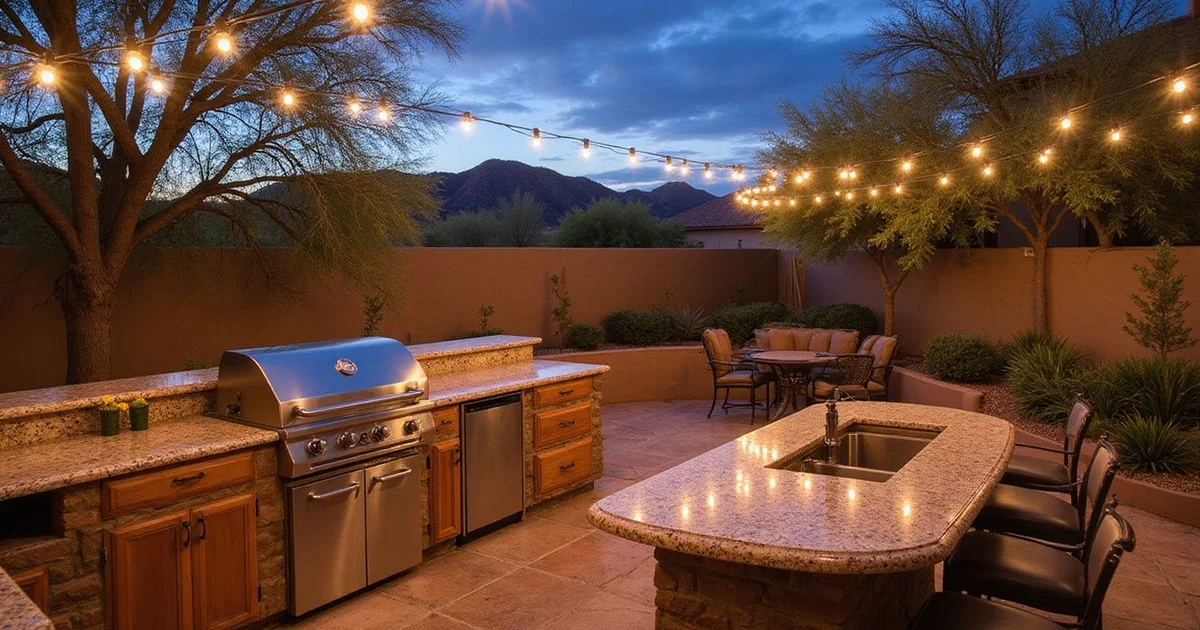
Transform Your Arizona Backyard with Pavers
Living in the Valley means your backyard is essentially your second living room.
We have noticed that for most homeowners in Surprise and Scottsdale, the patio is where life actually happens between October and May.
But a simple concrete slab often creates more problems than it solves in our climate.
Poured concrete tends to crack under the pressure of our soil’s expansion and contraction.
We have seen this happen repeatedly when the ground shifts during monsoon season.
Pavers offer a practical solution because they are a flexible pavement system.
They move with the earth rather than fighting against it.
This flexibility prevents the unsightly structural cracks that plague so many Phoenix driveways and patios.
Beyond durability, a well-planned paver design adds significant value to your property.
Real estate data for the Phoenix metro area suggests that functional outdoor living spaces yield a high return on investment.
We are going to walk you through the specific materials that handle our heat, the designs that maximize your space, and the installation standards required for our soil conditions.
Choosing the Right Paver Material for Arizona
Selecting the right material is about more than just color.
You need a surface that can withstand UV index levels of 11+ and surface temperatures that can cook an egg.
We evaluate materials based on heat retention, durability, and maintenance requirements.
Here is how the top options compare for our specific climate.
| Material | Heat Retention | Maintenance Level | Best Use Case |
|---|---|---|---|
| Travertine | Low (Coolest) | Medium (Sealing needed) | Pool decks & uncovered patios |
| Concrete Pavers | High (Gets hot) | Low to Medium | Driveways & shaded areas |
| Porcelain | High (Very hot) | Very Low (Stain resistant) | Modern dining areas (covered) |
| Flagstone | Medium | High (Grout/Joints) | Rustic pathways & garden accents |
Travertine Pavers
Travertine is the superior choice for any unshaded area in your backyard.
We recommend this natural stone primarily because of its thermal properties.
It stays 20 to 30 percent cooler than concrete products.
This difference is massive when the ambient temperature hits 110 degrees.
We find that lighter colors, like Ivory or Silver, allow you to walk barefoot to the pool without burning your feet.
The French pattern (Versailles) layout remains the standard for a high-end look.
It hides minor stains better than uniform grids and breaks up the visual monotony of large spaces.
Interlocking Concrete Pavers
Concrete pavers provide the most versatility in terms of color and strength.
Manufacturers like Belgard and Tremron have engineered these products to withstand heavy loads, making them ideal for driveways or heavy-use commercial spaces.
We often suggest the “Catalina” or “Bergerac” styles for clients who want the look of stone without the price tag of natural quarried material.
One potential drawback is color fading.
Our Arizona sun is relentless.
You must seal concrete pavers every 2-3 years to maintain their original vibrancy.
Natural Flagstone
Flagstone offers a specific rustic aesthetic that pairs perfectly with xeriscape designs.
We source Arizona Buff or Sedona Red flagstone to match the natural geological tones of the Sonoran Desert.
This material requires a skilled hand to install correctly.
The irregular thickness of the stones means we have to bed them carefully to avoid creating tripping hazards.
Flagstone works best for pathways or informal seating areas rather than main dining spaces where you need stability for chairs and tables.
Porcelain Pavers
Porcelain is rapidly gaining traction in the Phoenix market for modern home designs.
We love using large-format porcelain (24x24 inches) to create sleek, contemporary lines.
These pavers are virtually non-porous.
Red wine, BBQ grease, and chlorine will not stain them.
However, they become extremely hot in direct sunlight.
We strictly advise installing porcelain only in covered patios or completely shaded areas.
Design Ideas That Work in the Desert
The Multi-Level Entertainment Patio
Flat backyards can feel one-dimensional and uninspiring.
We create visual separation by building distinct elevations for different activities.
A typical layout might feature a cooking station at the house level, dropping down 6 inches to a dining area, and then dropping again to a fire pit lounge.
This approach defines zones without blocking your view of the mountains or desert sunset.
Structural retaining wall blocks, such as Belgard’s Tandem Wall, serve as both the step risers and the structural support for these changes.
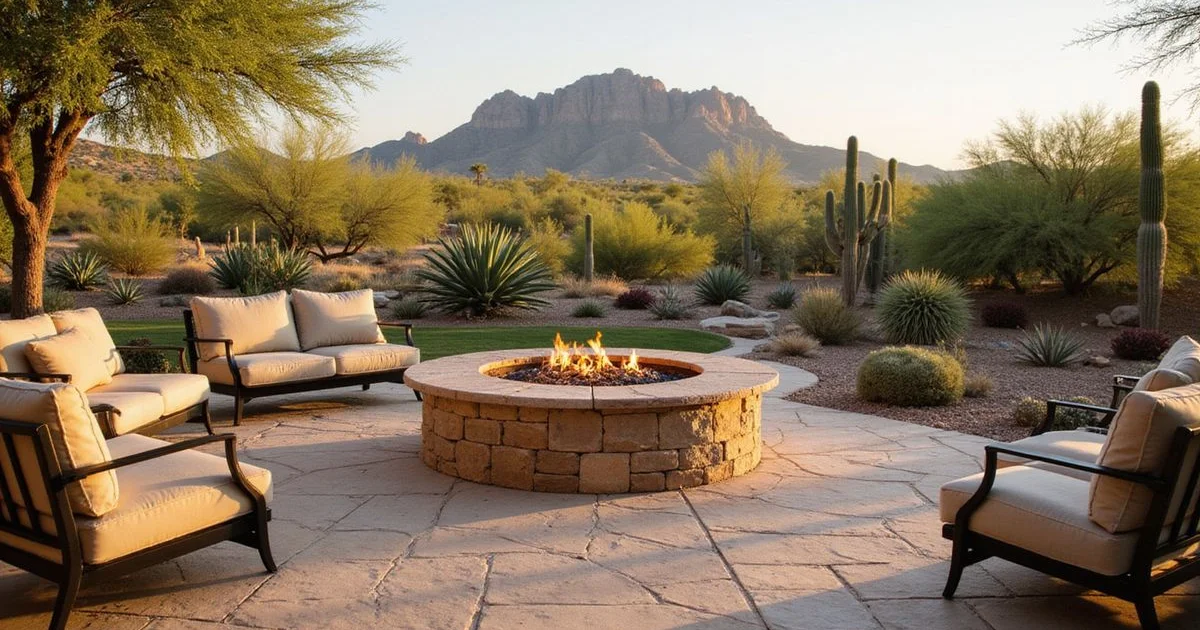
The Circular Fire Pit Patio
A round patio layout softens the hard angles of block walls and rectangular lot lines.
We frequently install a 12 to 15-foot diameter circular patio centered on a gas fire feature.
Wood-burning pits are less common now due to Maricopa County’s “No Burn” days and smoke restrictions.
Gas features allow you to enjoy the ambiance instantly without worrying about air quality alerts.
Building a permanent seat wall around the perimeter adds functionality.
We top these walls with smooth capstones to provide permanent seating for 6-8 people, eliminating the need for cluttering patio furniture.
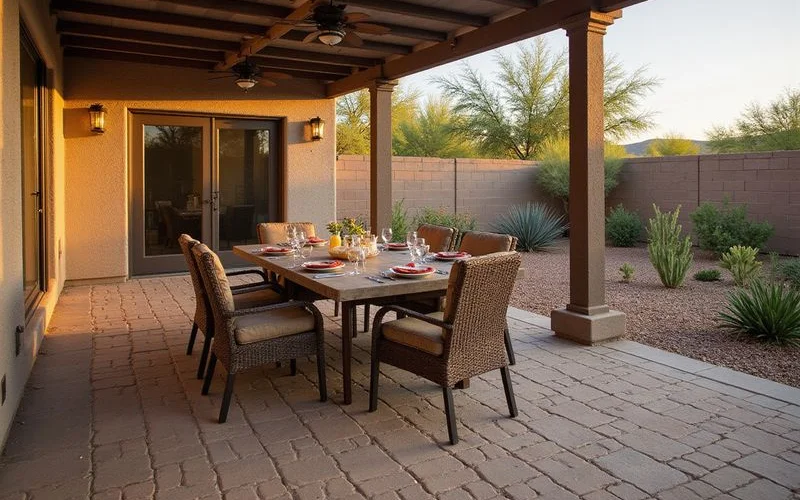
The Covered Outdoor Dining Patio
Shade is the single most important factor for extending your patio season into May and September.
We design these spaces as true outdoor rooms anchored by a solid roof structure or an Alumawood pergola.
Integrating utilities during the paver installation is a pro tip many overlook.
We run conduit under the pavers for misting pumps, outdoor fans, and electrical outlets before laying the base.
Warm-toned Travertine, such as Walnut or Noche, reduces glare under these covered structures compared to bright white options.
The 20% Rule: When budgeting for your project, allocate 20% of your materials budget to “cuts and waste.” Arizona yard layouts often have curved walls and non-standard angles. You will need extra pavers to cut into these borders for a professional finish.
The Pool Deck and Patio Combination
Your pool deck needs to be safe as well as beautiful.
We prioritize slip resistance ratings (coefficient of friction) when selecting materials for wet areas.
Tumbled Travertine provides a natural grip that actually improves when wet.
Extending the pavers from the pool coping all the way to the back door creates a cohesive flow.
This “infinity” look makes the yard feel larger than it is.
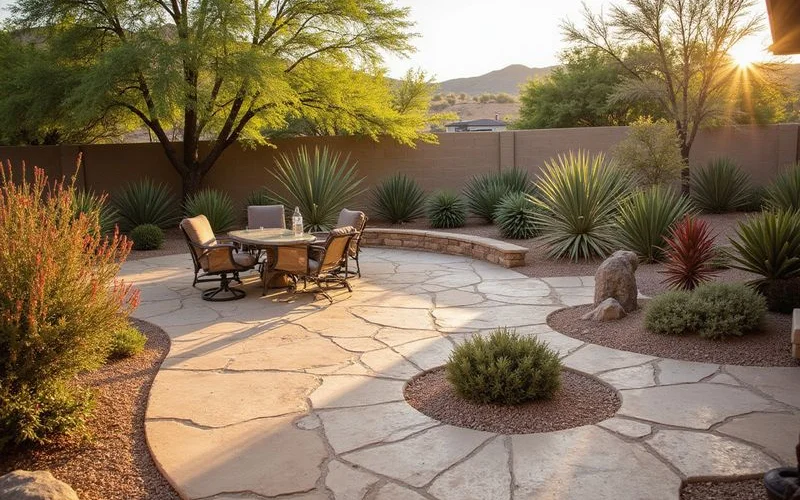
The Pathway and Garden Patio
Side yards are often wasted space in Phoenix tract homes.
We transform these narrow strips into functional garden walks using large stepping stones separated by decorative gravel.
Stabilized Decomposed Granite (DG) is the secret ingredient here.
We mix a binding agent into the granite between the stones so it hardens like concrete but still allows water to permeate.
This prevents the gravel from washing away during heavy rains while keeping that natural desert look.
Popular Paver Patterns for Arizona Patios
The pattern you choose affects both the aesthetics and the structural strength of the surface.
Running bond. This offset row pattern creates strong linear lines. We often orient these lines toward the focal point of the yard to draw the eye in that direction.
Herringbone. This is the strongest mechanical bond available. We recommend 45-degree herringbone for driveways because the interlocking angle prevents pavers from shifting under the torque of car tires.
French pattern (Versailles). This four-size layout is the standard for Travertine. We use this to eliminate long grout lines, which gives the patio a more natural, stone-like appearance rather than a manufactured grid.
Basketweave. This pattern has a vintage charm. We see this used frequently in historic districts in downtown Phoenix or Glendale to match mid-century architecture.
Circular kits. These pre-cut packages make creating a perfect circle easy. We use them primarily for standalone fire pit islands in the landscaping.
Installation Considerations for Arizona
Our soil conditions in the Salt River Valley present unique challenges.
Proper base depth. The standard 2-inch base used in other parts of the country will fail here. We excavate a minimum of 8 inches for driveways and 4-6 inches for patios. We fill this space with ABC (Aggregate Base Course) and compact it in lifts to create a rock-hard foundation that bridges over expansive clay pockets.
Edge restraints. Pavers will drift apart over time without a concrete border. We pour a concrete “toe” around the perimeter of the paved area below the surface. This hidden concrete bond beam is far superior to plastic edging spikes, which often pull loose in our dry, crumbly soil.
Polymeric sand joints. Standard sand blows away in haboobs and washes out in monsoons. We use high-performance polymeric sand like Gator Dust. This material contains polymers that activate with water, locking the pavers together and preventing weeds from rooting in the joints.
Drainage planning. Water management is critical when you have hard surfaces. We grade all patios with a minimum slope of 1/4 inch per foot away from the home. In flat yards, we install deco-drains or channel drains connected to the street or a dry well to handle the rapid deluge of a summer storm.
Check Your HOA Guidelines: Before falling in love with a specific color, check your CC&Rs. Many associations in Surprise and Peoria have an approved materials list. They often ban specific colors (like red brick) or require front yard hardscaping to match the driveway.
Your Dream Patio Starts Here
A professional paver installation does more than just cover dirt.
It extends your square footage and creates a venue for family memories.
We believe that every backyard in the Valley has the potential to be a personal resort.
Getting the engineering right is just as important as the design.
At Surprise AZ Landscaping, we handle the entire process from the initial demolition of old concrete to the final sealer application.
We invite you to reach out to our team to discuss how we can upgrade your outdoor living space.

Written by
Alfred D. Mills
Founder & Licensed Landscape Contractor
Alfred D. Mills founded Surprise AZ Landscaping over a decade ago with a mission to bring premium desert landscaping to the Phoenix metropolitan area.
Arizona State Landscape License