Understanding HOA Xeriscaping Rules in Maricopa County
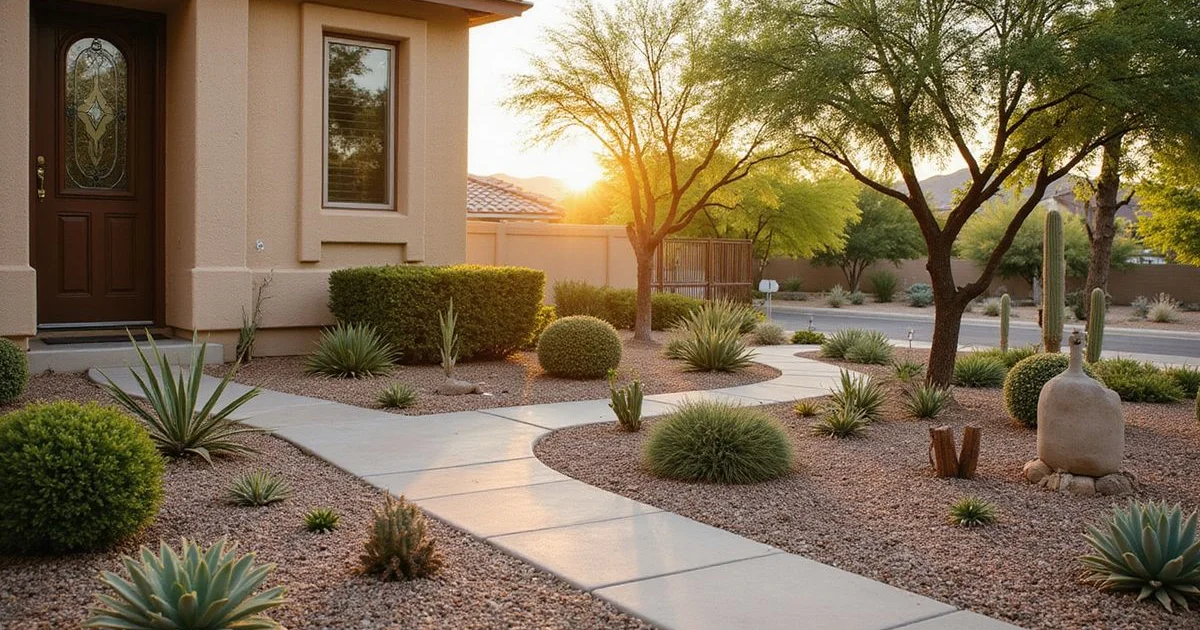
Living in a homeowners association community in Maricopa County means balancing your personal style with community standards. You likely already know that changing your front yard requires approval. Xeriscaping is the standard for modern, sustainable living in the Phoenix metro area.
Many homeowners hesitate to start a xeriscape conversion project because they fear a rejection letter. The paperwork can feel overwhelming, and the guidelines are often written in confusing legal language.
We have found that approval is almost guaranteed when you understand the specific rules. Arizona law actually protects your right to water-smart landscaping. The secret lies in knowing exactly where the HOA’s authority ends and where your rights begin.
Arizona State Law and Your Right to Xeriscape
Arizona Revised Statutes Section 33-1817 is the most important tool in your arsenal. This specific law prohibits HOAs from banning the installation of drought-tolerant landscaping.
Your HOA cannot simply say “no” to xeriscaping in favor of grass. We frequently remind clients that the law protects “water-saving devices” and “drought-tolerant” vegetation. This legislation was designed to secure Arizona’s water future.
However, the statute does allow associations to enforce “reasonable” design guidelines. These rules usually cover:
- Plant Maturity Size: Ensuring trees won’t block views or sidewalks.
- Aesthetics: Regulating the color of rocks or the placement of pots.
- Maintenance: Requiring that the yard looks intentional, not neglected.
In our experience working with communities throughout Surprise, Glendale, and Peoria, boards are cooperative when you speak their language. They want to see a plan that increases property values.
Common HOA Restrictions You Should Know
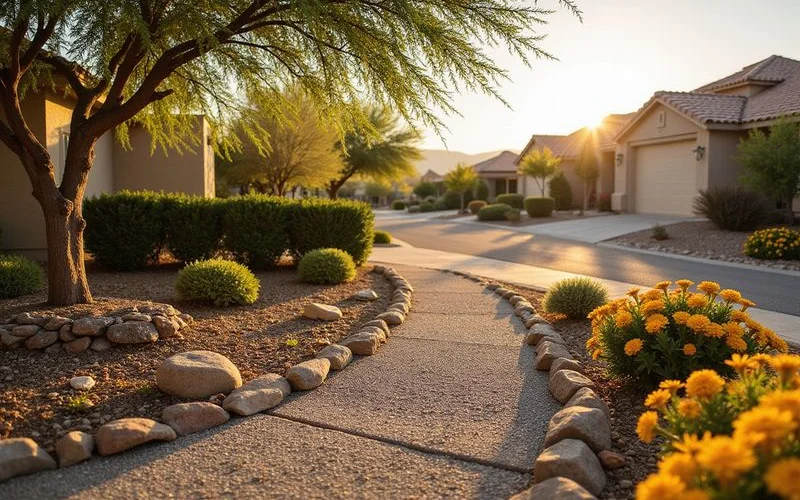
While the law is on your side, the design details matter. HOAs in the West Valley typically enforce four specific categories of restrictions.
Ground Cover Regulations
Most associations require that 60% to 75% of the yard is covered with organic material or decorative rock. Bare dirt is never acceptable.
We recommend paying close attention to the “minus” versus “screened” granite distinction. “Minus” granite contains dust and packs down hard, while “screened” granite is loose rock. Some HOAs mandate one over the other to prevent runoff or dust issues.
The Approved Plant List
Your community likely relies on a specific document for plant selection. This is often based on the Arizona Municipal Water Users Association (AMWUA) guidelines.
If a plant isn’t on the list, you will need to provide data. We always suggest submitting the specific water-usage data from a credible source if you want to use a unique species. This serves as your proof of “drought tolerance” under state law.
Hardscape and Rock Colors
HOAs are strict about color palettes to ensure neighborhood consistency. You will typically be limited to earth tones.
Commonly Accepted Granite Colors:
- Madison Gold: A standard gold/tan prevalent in Surprise.
- Table Mesa Brown: A darker, richer brown common in Peoria.
- Desert Brown: A neutral, light brown.
Bright white rock or artificially colored gravel is rarely approved.
Placement and Maintenance
Safety is a primary concern for review committees. Large cacti, such as Agaves or Saguaros, generally must be set back at least 3 to 5 feet from sidewalks.
We also see strict rules regarding “volunteer” plants. These are weeds or wildflowers that grow unintentionally. Your approval often hinges on a promise to keep the gravel free of debris.
Before starting your xeriscape project, request a copy of your HOA’s architectural review guidelines and approved plant list. Having these documents in hand before designing your landscape saves weeks of back-and-forth during the approval process.
Step-by-Step HOA Approval Process
Getting a design approved is a formal procedure that requires attention to detail. We guide our clients through a specific six-step workflow to ensure success.
Step 1: Review the CC&Rs. Read the Covenants, Conditions, and Restrictions for your specific subdivision. Look for the “Architectural Control” or “Landscaping” section.
Step 2: Request the specific application form. Do not use a generic letter. Most management companies in Maricopa County use a specific “Architectural Design Review Request” form.
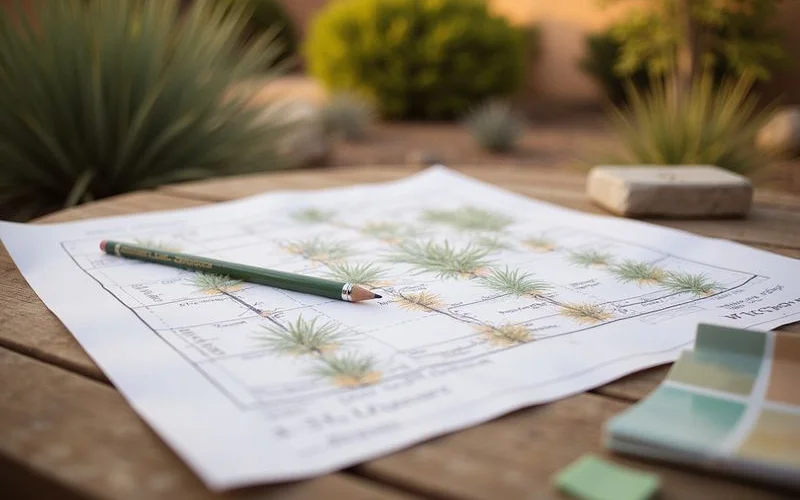
Step 3: Create a scaled professional plan. Your chances of approval drop significantly with a hand-drawn sketch. We produce plans at a 1:10 or 1:20 scale that clearly label every plant variety, rock color, and hardscape element.
Step 4: Compile your material samples. HOAs often want to see the physical color of the rock you plan to use. You might need to provide a small sample bag of granite or a link to the supplier’s specification sheet.
Step 5: Attend the committee meeting. Some boards meet monthly to review requests. Your presence allows you to answer questions immediately rather than waiting for a rejection letter.
Step 6: Wait for the written letter. Verbal approval is not enough. You must have the signed approval letter in hand before a shovel hits the dirt.
Tips for Getting Your Design Approved the First Time
Rejections usually happen because the committee cannot visualize the final result. We have identified specific strategies that make it easy for them to say “yes.”
Layer Your Plant Heights
HOAs hate “rockscapes” that look like parking lots. You need to show vertical variety.
- Tall: Desert Willow or Palo Verde (provides canopy).
- Medium: Texas Sage or Red Yucca (provides structure).
- Low: Lantana or Damianita (provides ground cover).
Prioritize Native Bloomers
Color proves that the design is high-end. We always include plants like Baja Fairy Duster or Penstemon. These species are native, drought-hardy, and produce vibrant flowers that committees love.
Submit “After” Photos
Visuals are powerful persuaders. We include photos of similar completed projects in the application package. This shows the board exactly what quality level they can expect.
Define the Irrigation Plan
A common fear is that the plants will die and leave a yard full of dead sticks. You should explicitly state that a drip irrigation system with a smart controller will be installed. This assures the board that the investment will be maintained.
Common Mistakes That Lead to HOA Denials
We see homeowners make the same avoidable errors time and again. You can save yourself a headache by checking for these red flags.
Vague Descriptions
“Planting some cactus” is not a plan. You must list the botanical name (e.g., Carnegiea gigantea) and the container size (e.g., 24-inch box). Specificity signals professionalism.
Using Prohibited Invasive Species
Certain plants are banned because they spread uncontrollably into the desert.
- Fountain Grass: Often restricted due to fire risk and invasiveness.
- Oleander: sometimes restricted due to toxicity and size.
Ignoring Hardscape Ratios
Too much concrete looks commercial. We ensure that the ratio of “softscape” (living plants) to “hardscape” (pavers/concrete) meets the community percentage requirements.
Forgetting the Neighbor Impact
Light pollution or drainage issues will sink an application. Your plan should note that new lighting is shielded and that drainage flows away from neighboring properties.
How We Help With HOA Compliance
Surprise AZ Landscaping handles the administrative burden for you. Our team treats the HOA submission as a critical part of the construction process.
We create the professional CAD designs, fill out the architectural request forms, and communicate with the management company. You don’t have to worry about color codes or botanical names.
Our track record includes approvals in strict communities like Marley Park, Surprise Farms, Sun City Grand, and Vistancia. We know what these specific boards are looking for.
Arizona law protects your right to water-efficient landscaping. If your HOA denies a reasonable xeriscape design, you may have legal recourse under A.R.S. 33-1817. We recommend consulting with a real estate attorney if you believe your rights are being violated.
Start Your HOA-Approved Xeriscape Today
A professional xeriscape conversion increases your home’s curb appeal while lowering your water bill. You have the law and the right team on your side.
There is no need to delay your project out of fear of the HOA. We are ready to design a compliant, beautiful landscape that your neighbors will envy.
Contact us for a free consultation to discuss your vision. We will review your community’s specific guidelines and build a plan that gets approved.

Written by
Alfred D. Mills
Founder & Licensed Landscape Contractor
Alfred D. Mills founded Surprise AZ Landscaping over a decade ago with a mission to bring premium desert landscaping to the Phoenix metropolitan area.
Arizona State Landscape License