Choosing the Right Irrigation Method for Desert Landscapes
Every landscape in the Phoenix metro area needs an irrigation system. Without supplemental water, even the toughest native desert plants struggle to establish themselves, and any turf grass or non-native plantings will simply die. The question is not whether you need irrigation, but which type of system is best for your specific landscape.
Drip irrigation and sprinkler systems each have distinct strengths and limitations, and understanding these differences is essential for building a water-efficient, healthy landscape in Arizona’s challenging climate. In many cases, the best approach combines both methods within the same yard, using each where it performs best.
After installing and maintaining irrigation systems across Surprise, Phoenix, Scottsdale, Glendale, and the broader Maricopa County region for over a decade, we have developed a clear perspective on when to use each system and why.
How Drip Irrigation Works
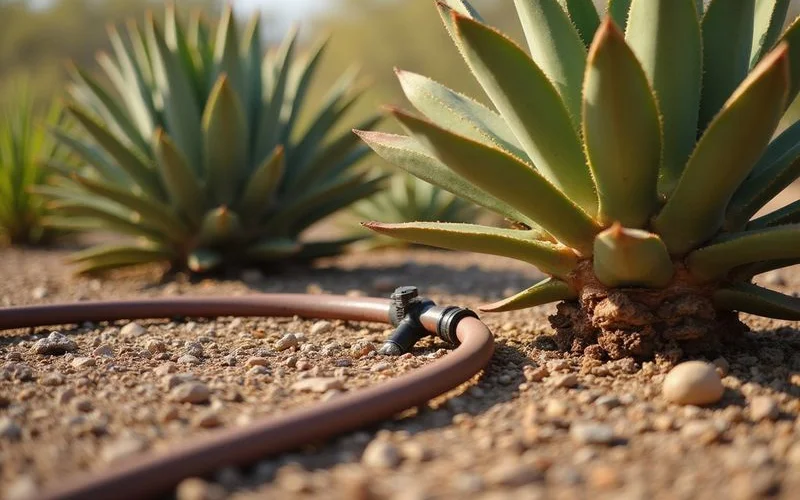
Drip irrigation delivers water slowly and directly to the root zone of individual plants through a network of tubing and emitters. Water seeps out of small emitters at a rate of 0.5 to 4 gallons per hour, compared to the 1 to 3 gallons per minute that a single sprinkler head delivers. This low-volume, targeted approach means virtually no water is lost to evaporation, wind drift, or overspray.
A typical drip irrigation system consists of a pressure regulator to reduce household water pressure to the 15 to 30 PSI range that drip components require, a filter to prevent emitter clogging from sediment in the water supply, main distribution tubing (usually half-inch or three-quarter-inch polyethylene), quarter-inch distribution tubing running to individual plants, and pressure-compensating emitters at each plant location.
In the Arizona desert, where midday evaporation rates can consume 20 to 40 percent of water delivered by overhead sprinklers, drip irrigation’s ground-level delivery method is a significant advantage.
How Sprinkler Systems Work
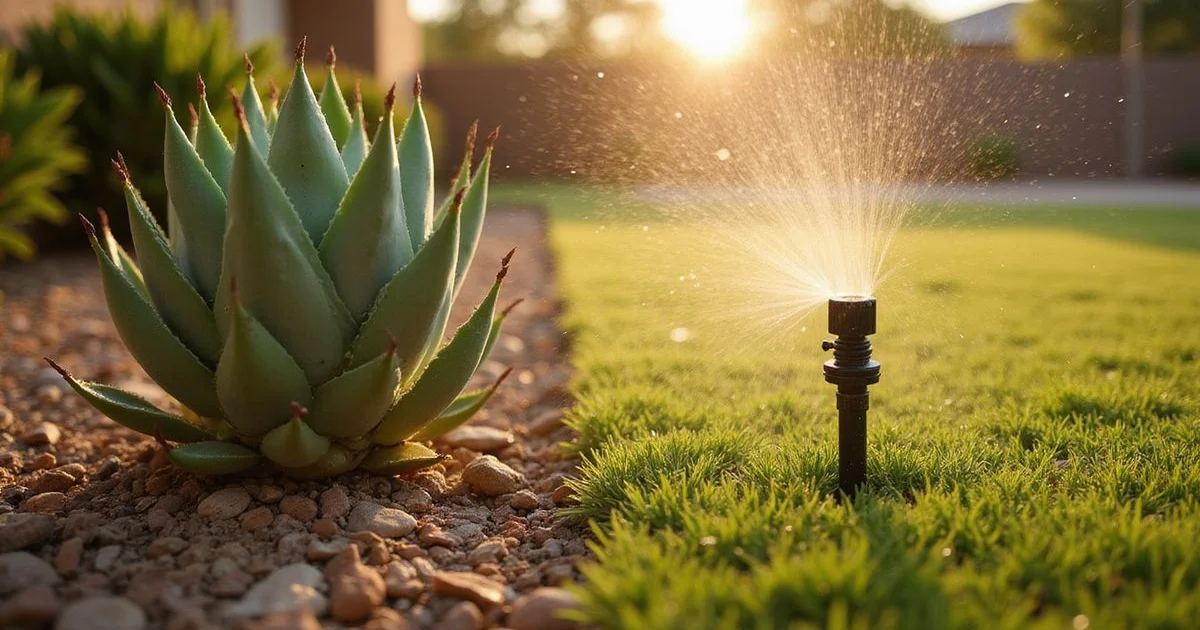
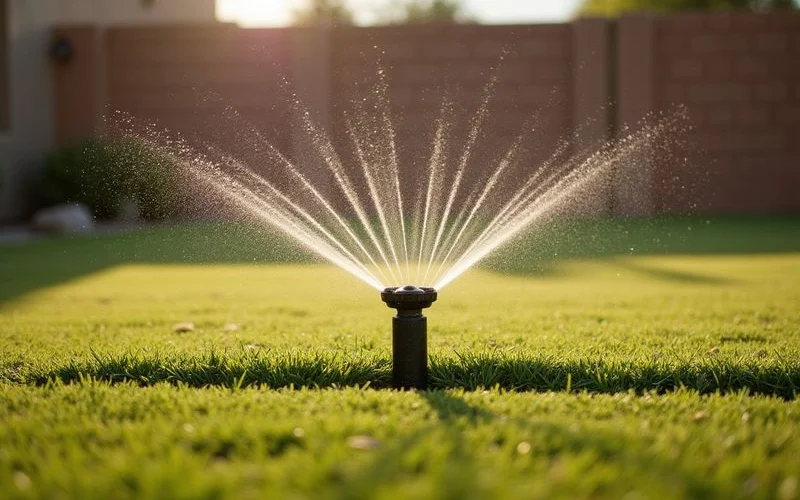
Sprinkler systems distribute water through pressurized spray heads or rotary nozzles that broadcast water over a defined area. Pop-up spray heads are the most common type for residential lawns, delivering water in a fixed pattern (half circle, full circle, or adjustable arc) at relatively high flow rates.
Modern rotary nozzles, like the Hunter MP Rotator or Rain Bird R-VAN, represent a significant improvement over traditional spray heads. They apply water at a much slower rate that more closely matches soil absorption capacity, reducing runoff and improving efficiency.
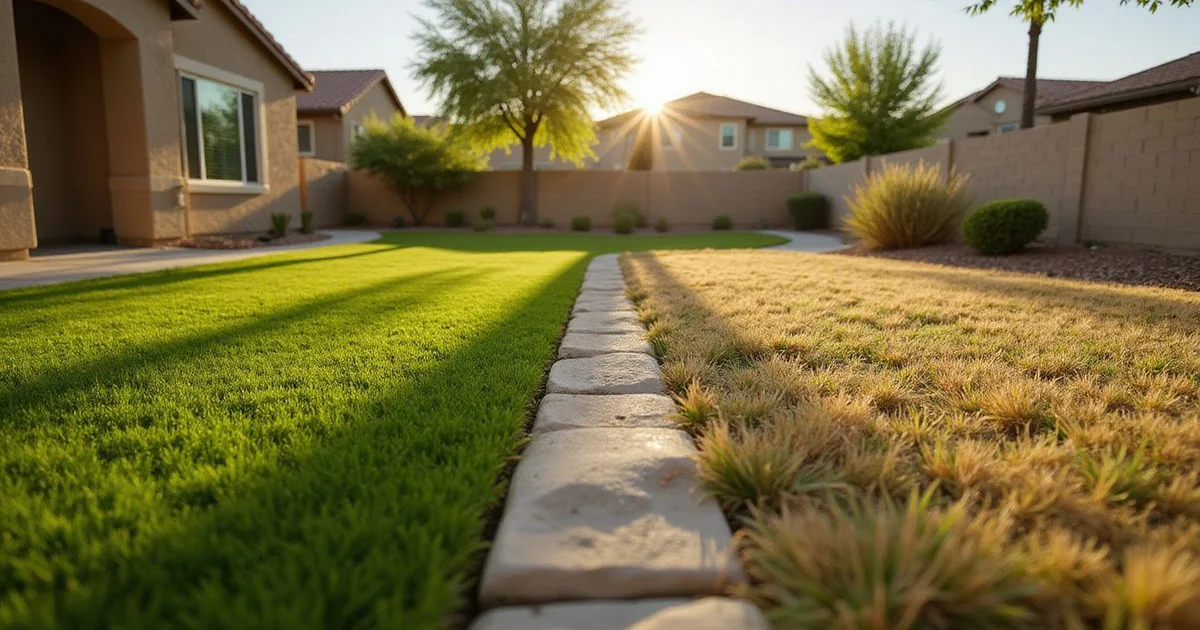
Sprinkler systems are designed for uniform coverage over large, continuous areas. They excel at keeping turf grass alive and green because grass needs water distributed evenly across its entire surface area, not just at individual root points.
Side-by-Side Comparison
Water Efficiency
Drip irrigation applies water with 90 to 95 percent efficiency, meaning 90 to 95 percent of the water delivered actually reaches plant roots. Losses from evaporation and wind are minimal because water is delivered at ground level beneath mulch or decorative rock.
Sprinkler systems typically operate at 50 to 75 percent efficiency. In the Arizona summer, when air temperatures exceed 110 degrees and humidity drops to single digits, midday evaporation can consume a significant portion of water before it ever reaches the soil. Wind drift further reduces efficiency, especially in open areas.
For desert plant beds, xeriscaping, and shrub borders, drip irrigation saves 30 to 50 percent more water compared to sprinklers irrigating the same plants.
Cost Comparison
Installation costs vary based on property size and system complexity:
- Drip irrigation for a typical residential landscape (2,000 to 4,000 sq ft of planting beds) costs $1,500 to $4,000 for professional installation.
- Sprinkler systems for a similar area cost $2,500 to $6,000 because they require more components (sprinkler heads, swing pipes, lateral lines) and more extensive trenching.
Operating costs are where drip irrigation clearly wins. A well-designed drip system uses 40 to 60 percent less water than sprinklers for the same plantings, which translates to significant savings on your monthly water bill. Over a 10-year period, drip irrigation’s lower operating cost typically more than offsets its installation cost.
Maintenance Requirements
Drip systems require periodic inspection of emitters for clogging, particularly in areas with hard water (which is common throughout Maricopa County). Filters need to be cleaned or replaced quarterly, and tubing should be checked for damage from UV exposure, rodents, or foot traffic. Emitters near the surface can be dislodged by landscape maintenance activities.
Sprinkler systems need regular head adjustments to maintain proper coverage patterns, replacement of broken heads from lawn mowers or foot traffic, and seasonal adjustments to run times. Backflow prevention devices require annual testing per Arizona code.
Both systems benefit from a professional seasonal inspection and tune-up. We recommend spring and fall maintenance visits to ensure your system is operating at peak efficiency before and after the demanding summer season.
In the hard water conditions common throughout Maricopa County, flush your drip irrigation lines at least twice per year by opening the end caps and running water through the system for several minutes. This prevents mineral buildup from clogging emitters over time.
When to Use Drip Irrigation
Drip irrigation is the superior choice in these situations:
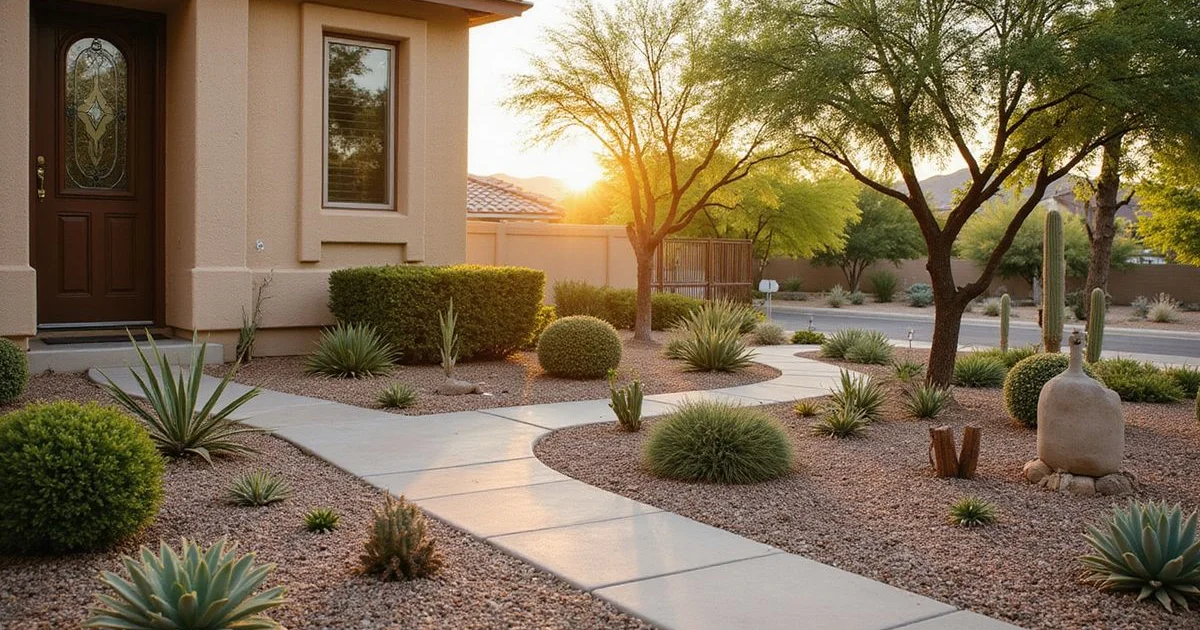
Desert plant beds and xeriscaping. Native and drought-adapted plants benefit from deep, infrequent watering delivered directly to their root zones. Overhead sprinklers waste water on the spaces between plants and on decorative rock or decomposed granite that does not need irrigation.
Shrub borders and foundation plantings. Drip tubing can be routed precisely around each plant, eliminating overspray onto walls, fences, windows, and walkways.
Raised beds and container gardens. The precise water delivery of drip irrigation prevents overwatering, which can lead to root rot in container plantings.
Slopes and hillsides. Drip irrigation eliminates runoff on sloped terrain. Sprinklers on slopes often create erosion problems because water runs off the surface before it can be absorbed.
Vegetable gardens and fruit trees. Drip irrigation keeps foliage dry, reducing the risk of fungal diseases that can affect food crops in the humid monsoon season.
When to Use Sprinklers
Sprinkler systems remain the better option in these situations:
Turf grass lawns. Bermuda grass, fescue, and ryegrass need uniform water distribution across the entire lawn surface. Drip irrigation cannot achieve the even coverage that turf requires.
Large ground cover areas. Dense, low ground cover plantings like trailing lantana or Asian jasmine that form a continuous mat are more efficiently watered with sprinklers than with drip emitters placed at individual plants.
Dust suppression. If you have large areas of decomposed granite or bare soil that generate dust, periodic overhead watering can settle the surface.
Artificial turf cooling. During extreme heat, a quick overhead spray can cool the surface of artificial turf by 30 to 40 degrees, making it comfortable to walk on.
The Best Approach: A Hybrid System
In our experience designing irrigation systems for Arizona properties, the most effective approach is a hybrid system that uses both drip and sprinkler methods in different zones.
Zone 1 (Turf): Sprinklers. High-efficiency rotary nozzles for any remaining turf grass areas.
Zone 2 (Desert plantings): Drip. Individual emitters sized to each plant’s water requirements, with separate zones for trees (high water) and small succulents (low water).
Zone 3 (Foundation and borders): Drip. Targeted watering that keeps water away from your home’s foundation and prevents staining on walls and fences.
Zone 4 (Potted plants and specialty areas): Drip. Micro-tubing and individual emitters for container plants, herb gardens, and accent plantings.
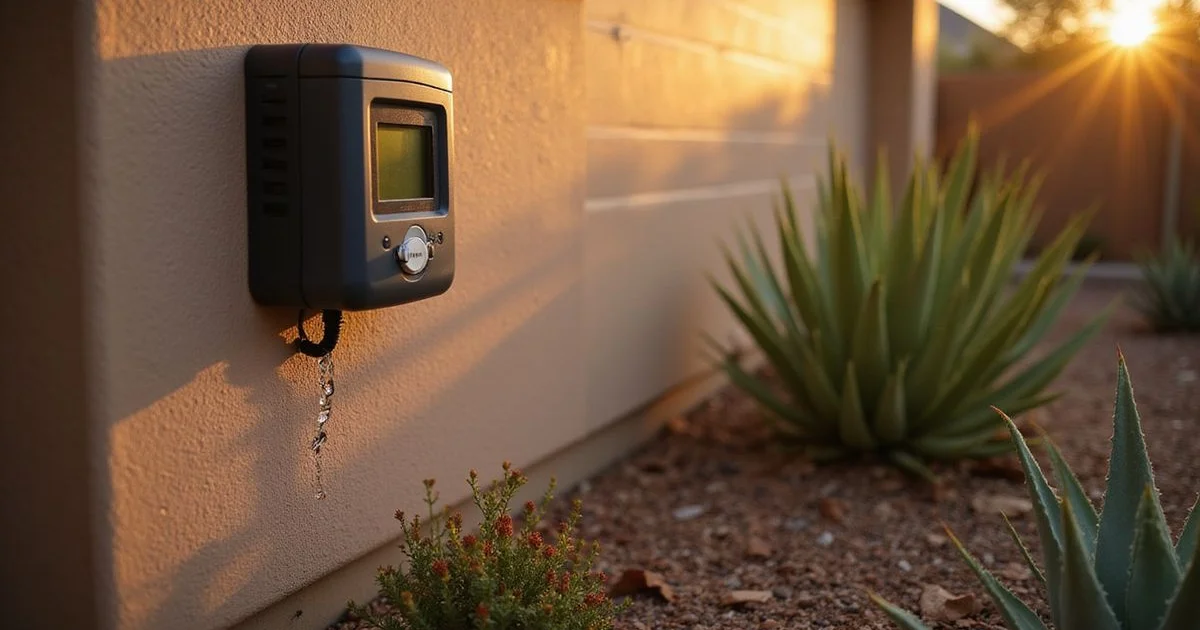
Each zone is programmed independently on a smart controller, allowing you to customize run times, frequency, and seasonal adjustments for each area of your landscape.
When converting sprinkler zones to drip irrigation, make sure to install a pressure regulator on each converted zone. Drip systems operate at 15 to 30 PSI, while sprinkler lines are pressurized at 40 to 60 PSI. Running drip components at sprinkler pressure will blow out fittings and damage emitters within days.
Common Irrigation Mistakes Arizona Homeowners Make
Over the years, we have seen several recurring mistakes that waste water and damage landscapes:
Overwatering. This is by far the most common problem. Many homeowners water their landscapes daily or every other day when desert plants only need deep watering every 7 to 14 days during summer and every 21 to 30 days during winter.
Watering at the wrong time. Irrigating during the heat of the day wastes 20 to 40 percent of water to evaporation. Always water between 4 AM and 8 AM to minimize evaporation losses.
Ignoring seasonal adjustments. A schedule that is appropriate for July will massively overwater your landscape in January. Reduce run times by 50 to 75 percent during the cooler months.
Using the same emitter size for all plants. A mature palo verde tree needs 15 to 20 gallons per watering, while a small agave needs only 1 to 2 gallons. Using the same 2-gallon-per-hour emitter for both results in either a drought-stressed tree or a drowned agave.
Let Us Design Your Ideal Irrigation System
The right irrigation system saves water, reduces your utility bills, and keeps your landscape healthy and beautiful through every Arizona season. Whether you need a new installation, a conversion from sprinklers to drip, or a comprehensive system upgrade with smart controller technology, our team has the expertise to design and install the perfect solution for your property.
Contact Surprise AZ Landscaping for a free irrigation consultation and water audit. We serve Surprise, Phoenix, Scottsdale, and communities throughout Maricopa County.

Written by
Alfred D. Mills
Founder & Licensed Landscape Contractor
Alfred D. Mills founded Surprise AZ Landscaping over a decade ago with a mission to bring premium desert landscaping to the Phoenix metropolitan area.
Arizona State Landscape License